

Strengthening The Salvation Army’s Disaster Response Across Southern Africa
“There are people sleeping outside. Go and do something.”
These words, shared by Colonel Stephen Malins during the Territorial Disaster Preparedness Workshop, reminded participants that disaster response has always been at the heart of The Salvation Army’s mission. What began with General William Booth’s call to practical Christian service continues today wherever Salvationists respond to human suffering with compassion, presence and action.
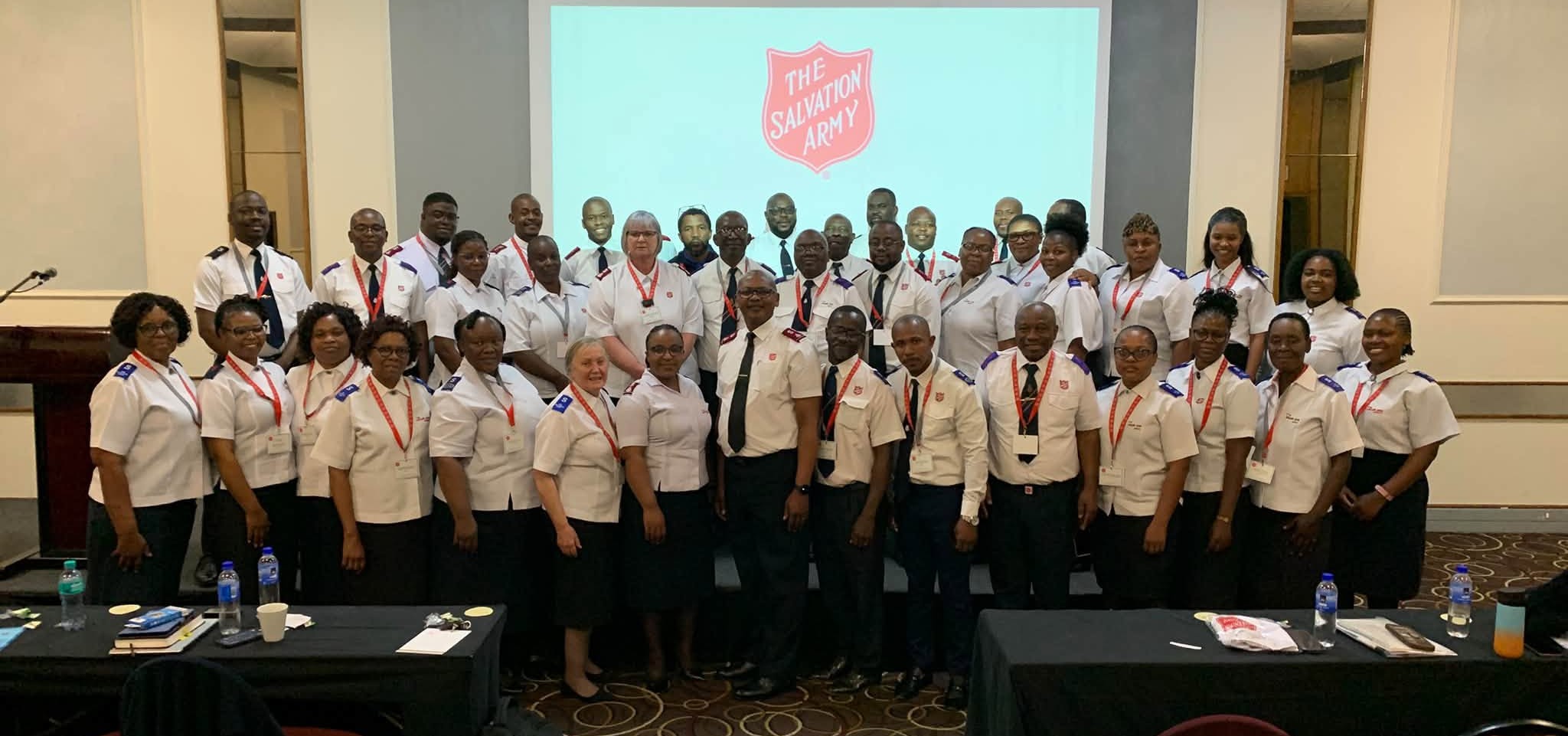
From 4–6 September 2026, forty-two participants from across the Southern Africa Territory gathered in Johannesburg for the first phase of the Strengthening Disaster Preparedness in Southern Africa project. The workshop brought together officers, local officers, soldiers and Territorial staff with one shared purpose: to strengthen the Territory’s ability to prepare for and respond to disasters within local communities.
The need for the training was clear. While disasters such as floods, fires, storms and civil unrest continue to affect communities across Southern Africa, many Divisions have struggled with limited preparedness structures, insufficient training and uncertainty about how to respond effectively when disaster strikes. The workshop therefore focused on practical skills rather than theory alone, equipping participants to become trainers and leaders within their own Divisions.


Throughout the three days, participants explored the full disaster management cycle, from prevention and preparedness through to response and recovery. They learned how to identify hazards within their communities, map local risks, develop emergency plans, recognise early warning signs and establish communication systems that can alert communities before a disaster occurs. They also discussed how to respond during emergencies, support affected families, provide psychosocial support and strengthen community resilience after a crisis.
One of the most powerful lessons came from the Territorial Disaster Management Framework, introduced by Major Thataetsile Semeno. Participants were challenged to adopt a simple but powerful response model:
Show Up → Assess → Respond → Escalate
The message was straightforward. Before funding applications, media campaigns or relief supplies, there must first be a Salvation Army presence.
“Communities remember who stood with them during times of crisis,” participants were reminded. Showing up is often the most important first response. By being present, listening, assessing needs and offering support, The Salvation Army demonstrates Christ’s love long before material assistance arrives.
The workshop was intentionally practical. Participants drew maps of their communities, identified hazards affecting local residents, discussed vulnerable groups and worked together to create preparedness actions for their Divisions. These exercises encouraged them to see themselves not simply as recipients of information but as custodians of their communities who already possess valuable local knowledge and leadership potential.
At the end of the workshop, participants did not leave with certificates alone, but with a mandate. The next phase of the project will see them returning to their Divisions to train others, establish Community and School Disaster Risk Reduction Committees, conduct awareness campaigns and help create communities that are better prepared for future emergencies, all with the support of the Emergency Coordinator and the Office of the Programme Secretary.
The strongest challenge came once again from the Territorial Commander as he reflected on an experience at the Zimbabwe Consulate during the recent relief response, where a child was waiting for someone to peel an orange that had been handed to him.
“Someone just put a resource in his hand which he could not open, and he was starving. There are people who are waiting for you, as a Salvation Army representative, to ‘peel it for them.'”
That challenge now rests with every participant who attended the workshop. The training has provided knowledge, skills and tools. The next step is action. As disasters continue to affect communities across Southern Africa, The Salvation Army is working towards a future where every Division is equipped, every community is better prepared and every response begins with compassionate presence and practical service.