

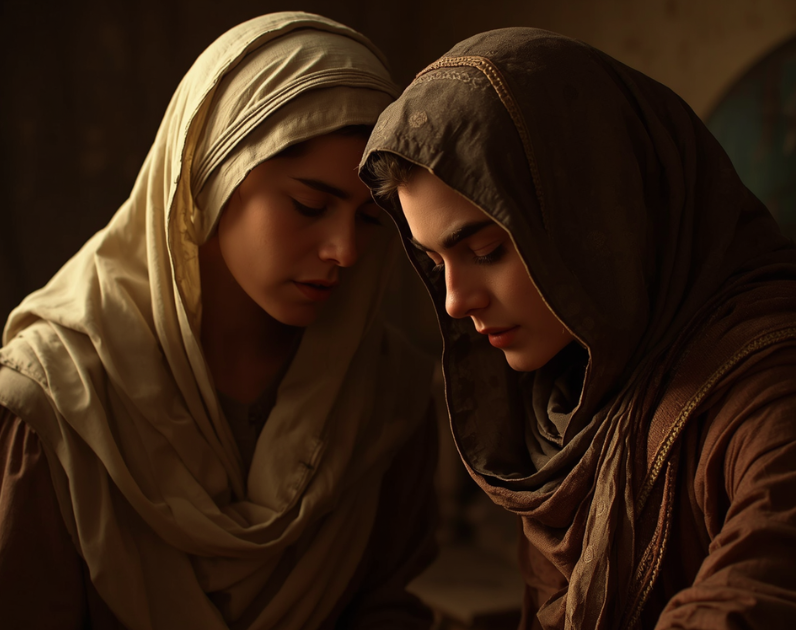
A Bible Study on Exodus 1:15 to 21
There are moments in Scripture where bold faith does not announce itself. It does not arrive with raised voices, dramatic gestures, or public recognition. Instead, it unfolds quietly, in ordinary spaces, through choices that may never be fully noticed by others. Exodus 1 introduces us to two such lives. Their names are Shiphrah and Puah. In a society where women, servants, and Hebrews were easily overlooked, Scripture records their names. That alone tells us something important. God notices faithfulness that the world ignores.
Read Exodus 1:15 to 21 slowly. If possible, read it twice. As you read, notice where power sits in the story and where faith operates.
Historical setting
Israel has grown numerous in Egypt, and Pharaoh responds with fear. What begins as concern quickly becomes oppression. Forced labour escalates into state sanctioned violence. Pharaoh’s command to the midwives is clear. Every Hebrew boy born is to die. This is not a private opinion. It is official policy, backed by authority and threat. Compliance would have been expected. Resistance would have been dangerous.
Shiphrah and Puah are positioned at the intersection of power and vulnerability. They serve under Pharaoh’s authority, yet their work places them at the very point where life begins. Every birth becomes a moment of decision.
The pressure of obedience
Scripture tells us plainly: “The midwives feared God and did not do what the king of Egypt had told them to do.” (Exodus 1:17) This verse is easy to read quickly, but it deserves attention. Their obedience to God is not theoretical. It is practical. It unfolds in real time, under pressure, with consequences they cannot control. They are not asked for a public declaration of faith. They are asked to carry out a command quietly. Their resistance is just as quiet. And yet, it is bold.
Fear of God and everyday faith
At the centre of their courage is a clear ordering of fear. They fear God more than they fear Pharaoh. This kind of fear is not terror. It is reverence. It is the settled conviction that God’s authority outranks every other voice. This kind of obedience flows from a conscience shaped by God’s grace and truth, not from legalism or rebellion for its own sake .
Shiphrah and Puah show us that bold faith is often shaped long before crisis arrives. Their response suggests a pattern of obedience was likely already in place. When pressure comes, they do not invent courage. They reveal it.
God’s response
When Pharaoh questions them, the midwives do not fully disclose their actions. Scripture does not focus on their words. It focuses on God’s response. “So God was kind to the midwives… and because the midwives feared God, He gave them families of their own.” (Exodus 1:20 to 21) God honours what they protected.
This does not suggest that obedience guarantees safety or comfort. It does show that God sees what is done in faith, even when it happens in hidden places. We believe that God values obedience and integrity expressed in daily life, not only in visible ministry roles .
Reflecting on our own lives
This passage presses gently into our own experience. Where do we feel pressure to conform? Not necessarily to violent commands, but to quieter compromises. To workplace expectations that dull integrity. Or perhaps to cultural norms that reshape values, or maybe to habits that slowly move us away from obedience.
Do we believe God sees faithfulness that happens out of sight? Shiphrah and Puah had no audience, no recognition, and no guarantee of protection. Yet God saw, remembered, and responded. What does fear of God look like in everyday decisions? For the midwives, it meant protecting life at personal risk. For us, it may mean honesty when cutting corners is easier, or kindness when impatience feels justified, or faithfulness when obedience costs us convenience or comfort.
Are we allowing faith to shape our small decisions? Bold faith is often revealed through consistency. The quiet yes to God, repeated over time, becomes the foundation for courage when it is needed most. The Salvation Army exists to preach the gospel of Jesus Christ and to meet human need in His name without discrimination. Shiphrah and Puah lived this mission long before it had a name. They protected life. They resisted injustice. They acted in obedience to God for the sake of others. Their story reminds us that mission often begins in places that look ordinary and unseen.
The account of Shiphrah and Puah reminds us that bold faith does not always announce itself. Sometimes (most often actually) it is found behind the scenes. Sometimes it protects life in hidden places. And sometimes it is simply the choice to honour God when no one else is watching. And God still sees what is done in faith. God still honours obedience. God still writes faithful names into His story.